Bamboo Skewers vs. Wood: The Ultimate Oven-Safe Guide for Professional Grilling
- Share
- publisher
- Eternity
- Issue Time
- May 9,2026
Summary
Can bamboo skewers go in oven? High-density bamboo resists heat and smoke. Shop our premium bulk skewers for pro kitchens now!
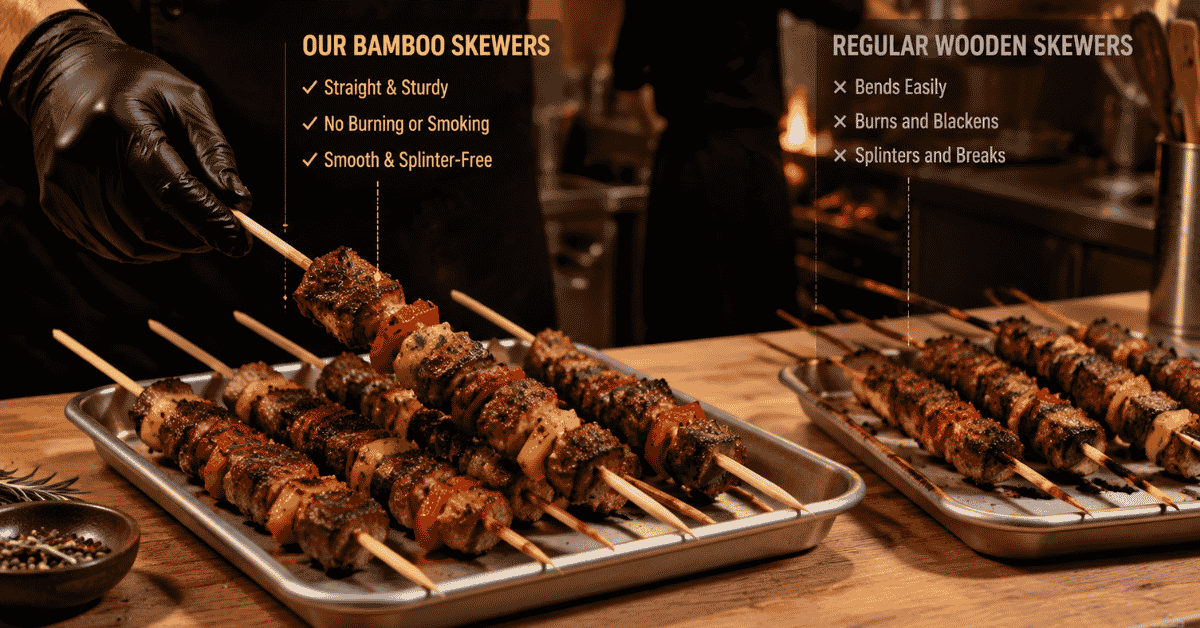
"Can I put bamboo skewers in the oven, or do I need wooden ones?"
After 16 years as a wholesale bamboo skewers supplier, we hear this twice a week. The internet is full of conflicting advice: some say bamboo burns instantly, others swear by a 30-minute soak. Let's cut through the confusion. After talking to professional chefs and testing thousands of batches at our factory, here is the truth about using bamboo and wood in professional kitchens.
The Heat Tolerance Reality Check
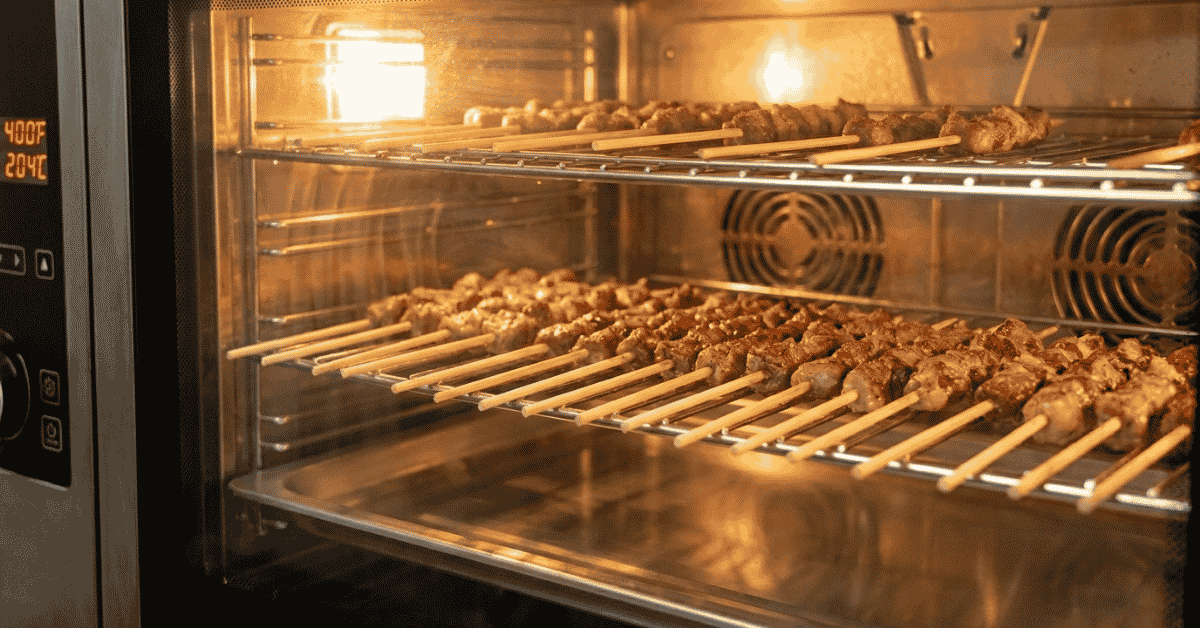
Both bamboo and wood skewers start to char around 400-450°F. They don't burst into flames—they char. Charring means the exposed tips turn dark brown and produce a bit of smoke, but the skewer remains structurally sound because the food shields most of its length.
However, bamboo and wood handle this heat differently:
Bamboo:
Properly processed bamboo has a lower moisture content (10-12%) and a denser fiber structure. It resists heat evenly and is less prone to warping.Wood:
Most disposable wooden skewers are softwoods with higher moisture content (15-20%). This leads to unpredictable behavior, like splitting or smoking, under high heat.Why Bamboo Wins in Professional Ovens
1. Density and Smoke Control
Properly processed bamboo produces noticeably less smoke. When moisture-laden wood heats up, that moisture turns to steam and then smoke as the wood chars. One catering manager told us: "We switched to bamboo for our broiler work because we were tired of setting off smoke alarms. Same method, way less smoke."
2. Structural Integrity
Wood has a directional grain that can split along knots or imperfections when heated. Bamboo’s uniform fiber structure doesn't have this weakness, ensuring it won't fail mid-service—a critical factor for high-volume operations maintaining strict bamboo skewer manufacturing standards.
3. Uniform Charring
Bamboo's density allows heat to spread gradually along its length. This results in less extreme temperature differences between the food-covered section and the exposed handle, leading to more uniform charring compared to the "hot spots" often found in wood.
The Soaking Debate: Does It Actually Work?
The theory is that soaking prevents burning. The reality? It barely helps.
Our tests show that surface moisture evaporates within the first few minutes in a 400°F oven. By minute 20, soaked and dry skewers look identical. Furthermore, soaking has downsides:
1. Wet skewers transfer moisture to the meat, affecting browning.
2. They are harder to handle and can splinter more easily when piercing food.
Our recommendation: Skip the soaking. Use proper protective techniques instead.
Pro Techniques to Prevent Charring
Instead of soaking, professional kitchens use these four methods to ensure bamboo skewer quality control:
Foil Shielding:
Wrap the exposed handles in a strip of aluminum foil. This reflects heat away from the material and is the most effective way to prevent charring in high-heat broilers.Smart Positioning:
Keep exposed handles away from direct heating elements. Even a two-inch offset can drop the temperature at the tips by 50°F.Choose the Right Thickness:
Thicker skewers (4mm) have more thermal inertia and heat up slower than thin ones (3mm). They are also less likely to break under heat stress.Use Longer Skewers:
A 12-inch skewer provides more handle length outside the high-heat zone, making it easier to flip without burning fingers.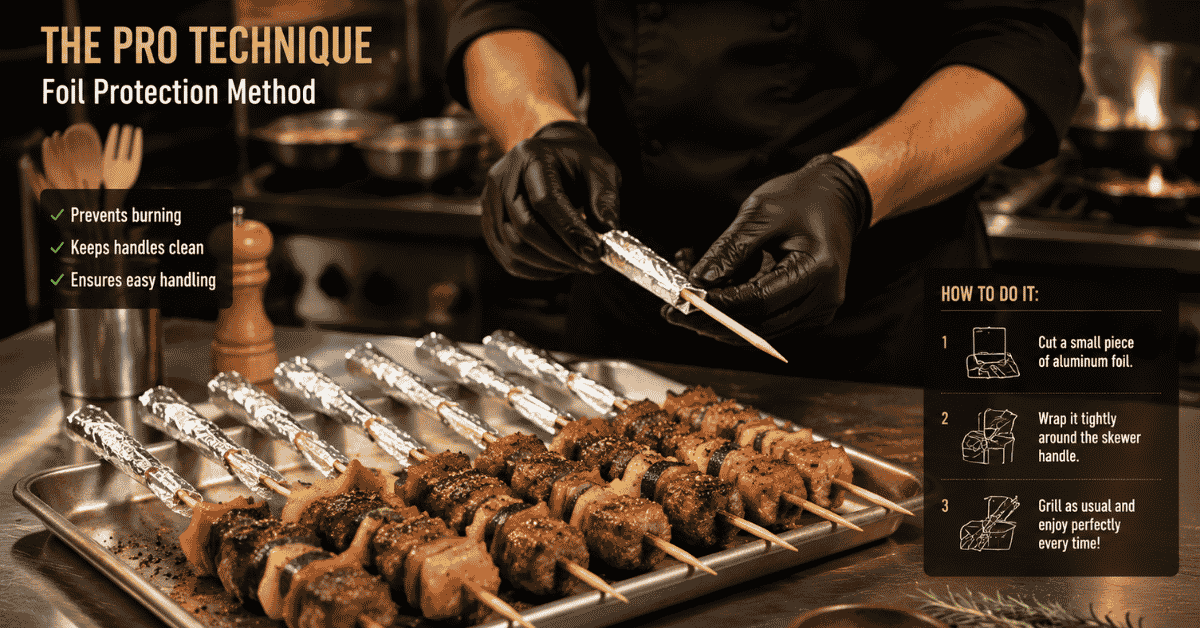
The QL Standard: Engineering Reliability for Your Kitchen
At QL, we believe your focus should be on the food, not the tools. A skewer might seem like a minor detail until it splits during a dinner rush or smokes out a dining room. That's why our process is built to eliminate these specific operational risks:
Predictable Performance through Source Control:
We harvest 4-5 year Moso bamboo from our own 666-acre forest to ensure every skewer has the same mature fiber density. For your business, this means no more "bad batches" that behave unpredictably under heat.The "Middle-Cut" Safety Net:
We use only the prime middle sections of the bamboo. While this increases our material costs, it provides the uniform strength needed for food-grade bamboo skewers that won't snap when pierced through dense proteins.Reducing Waste with Precision Finishing:
Our bamboo skewer manufacturing standards include double-polishing and infrared scanning. This ensures a smooth finish that won't splinter, protecting your customers and reducing the number of discarded, unusable pieces in every box.These choices aren't just about our standards—they are about ensuring that when you're running a high-volume service, your skewers are the last thing you have to worry about.
The Bottom Line
If you are currently sourcing premium bamboo skewers and want to ensure your kitchen never has to deal with unpredictable charring or breakage, choosing the right partner is the first step. Quality isn't just a buzzword—it's a measurable standard that protects your brand's reputation and your bottom line.
To help you vet your current inventory or evaluate new samples, we've created a quick-reference guide: [The Buyer's Checklist: How to Spot Quality Bamboo Skewers in 30 Seconds]. This guide simplifies our bamboo skewer manufacturing standards into three visual tests you can perform in the kitchen to instantly separate premium material from budget-grade alternatives.
Need a sample kit to test against your current supply? Contact us today. We'll provide the same high-density, food-grade bamboo skewers we supply to professional kitchens worldwide—no pressure, just performance.