Bamboo vs. Wood: Rethinking the Pulse of the Supply Chain
- Share
- publisher
- Eternity
- Issue Time
- Apr 16,2026
Summary
Forests are shrinking. Cycles are failing. Discover why bamboo’s rapid pulse is the future of resilient supply chains.
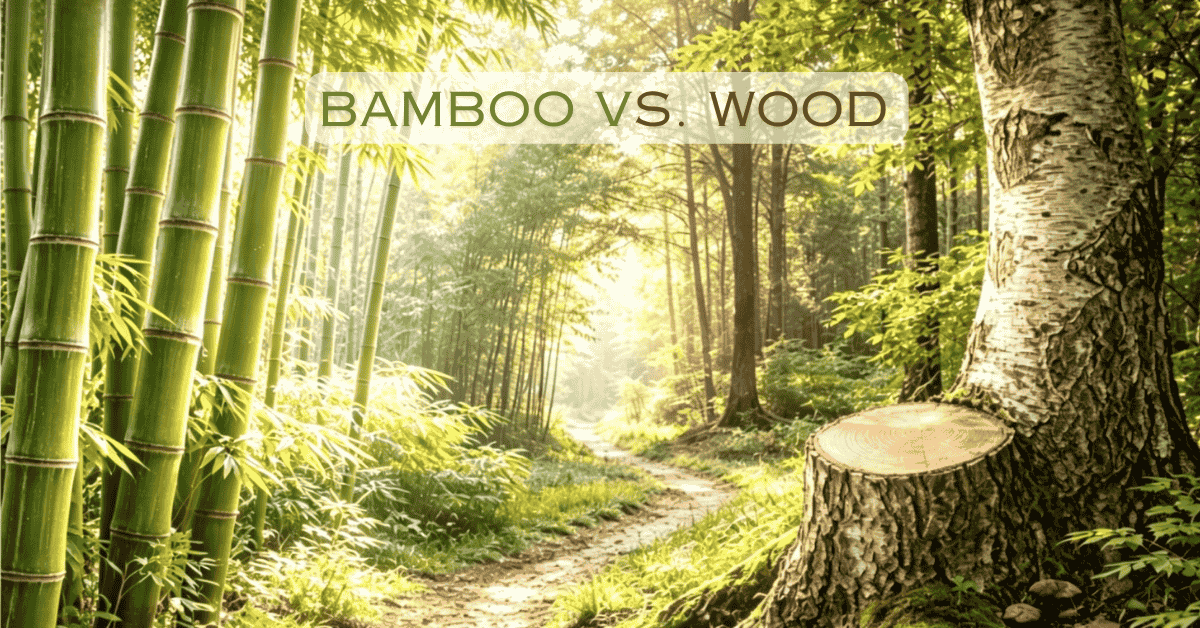
Let's be honest: the restaurant supply industry is hitting a wall.Wooden disposables are becoming a strategic headache. Forests are shrinking, regulations like the EUDR are tightening, and prices are on a permanent upward trek. You can't tell your customers, "Sorry, no forks today—supply chain issues." You need a source that keeps pace with your growth.
The secret isn't just finding a "wood alternative." It's about understanding a completely different clock. While a birch tree takes 30 years to mature, Moso bamboo is industrial-strength in just five. That 25-year gap isn't just a biological fact—it's the ultimate de-risking tool for your business.
1. The Timber Lag: A 30-Year Forecasting Nightmare
Traditional timber is a "slow-motion" industry. The trees being harvested today were planted in the early 2000s—long before anyone could have predicted the global surge in plastic-replacement demand. Because we can't "fast-forward" a tree, the market is trapped:
The Scarcity Trap:
We are consuming wood faster than 30-year forests can regenerate. This creates a permanent deficit.The Price Rollercoaster:
When demand spikes, timber suppliers can't react. You're left paying the price for a supply chain that takes decades to adjust.The Regulatory Squeeze:
Global mandates now protect old-growth forests. The pool of "legal wood" is shrinking, while bamboo remains the Gold Standard for zero-deforestation compliance.2. The Bamboo Sprint: From Shoot to Asset in 1,800 Days
Bamboo doesn't just grow; it dominates its environment through sheer efficiency.
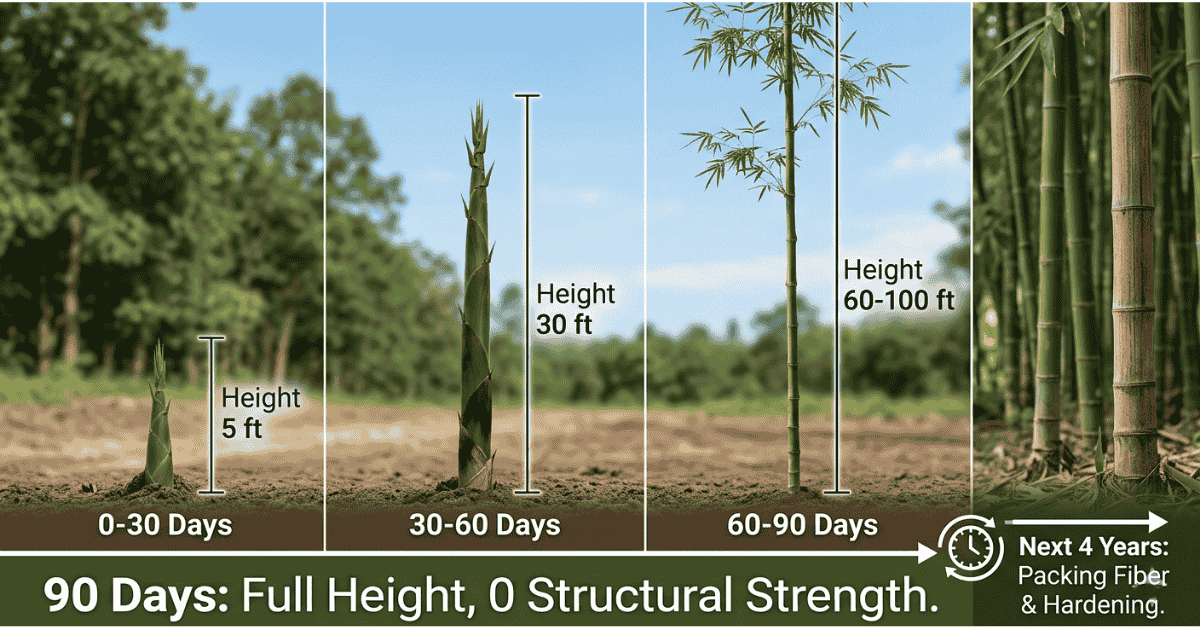
The 90-Day Dash:
A Moso shoot reaches its full height (up to 100 feet!) in a single season.The Hardening Phase:
For the next four years, it stops growing taller and starts getting stronger. Cell walls thicken, packing fibers into a dense, high-performance structure.The Golden Window:
By Year 5, it hits the "sweet spot"—maximum density, perfect flexibility, and ideal moisture balance.The Math: In the time it takes to grow one harvest of birch, a managed bamboo forest completes six full harvest cycles.
3. Performance Battle: Is it actually as good as wood?
B2B buyers often ask if bamboo can truly handle the job. For high-volume disposables, it's actually superior:
Flexibility vs. Brittleness:
Wood fibers are short and prone to snapping. Bamboo's long, continuous vascular bundles give it higher tensile strength. It bends where wood breaks.The "Splinter Factor":
Wood is naturally porous. Bamboo is linear and dense. When polished, it creates a silky-smooth finish that feels premium and eliminates micro-splinter risks.The Moisture Shield:
We harvest in winter when sap flow is lowest. This locks in natural resistance to mold, whereas wood often requires intensive chemical treatments to stay shelf-stable.The Supply Chain Pulse: Bamboo vs. Timber
| Feature | Moso Bamboo | Traditional Timber |
| Harvest Cycle | Rapid (Every 5 Years) | Slow (25–50 Years) |
| Regeneration | Self-renewing (No replanting) | Clear-cut (Requires replanting) |
| Land Yield | 3 – 5times Higher | Standard |
Tensile Strength | ~28,000 psi (Flexible) | ~14,000 psi (Brittle) |
Compliance | FSC / Zero-Deforestation | Increasing regulatory risk |
CO₂ Absorption | 35% More efficient | Standard |
4. The ESG Impact: Your Perpetual "Carbon Sponge"
For brands aiming for Net-Zero, bamboo is an unmatched ally. It's the difference between "extracting" a resource and "managing" a perpetual cycle.
Self-Regenerating Miracle:
Unlike trees, bamboo is a grass. Harvesting a mature culm actually stimulates the plant to send up new shoots. No replanting. No clear-cutting. No death.The Rhizome Shield:
Below the surface, bamboo maintains a massive, active root network (rhizomes). This stays alive even after harvest, holding the soil together and preventing the erosion that plagues timber lands.Carbon Efficiency:
Bamboo breathes in 35% more CO2 than trees and produces significantly more oxygen. It's a high-speed carbon-capture machine.5. What This Means for Your Procurement Strategy
Switching to a 5-year cycle resource is a strategic move to future-proof your brand:
Agile Inventory:
Need to scale for a nationwide contract? Bamboo supply responds in years, not decades.A Story That Sells:
"Perpetually Renewable" is a powerful, transparent story that builds deep loyalty with modern, eco-conscious consumers.Cost Stability:
Bamboo produces 3-5times more material per hectare than wood. This massive efficiency buffers you from the wild price swings of the timber market.
6. The QL Difference: Managing the 666-Hectare Clock
We don't rely on brokers. We control the source:
Precision Timing:
We only harvest at Year 4. If it's Year 3, it's too soft. If it's Year 7, it's too brittle. We mark every plot to ensure "Golden Window" quality.Traceability:
From our 666-hectare FSC-certified forest to your warehouse, every batch is logged.Reliability:
We don't just "try" to supply; we own the forest that ensures we can.Conclusion: Quality Starts in the Forest
In a world of shrinking resources, time is the ultimate luxury. Bamboo gives that time back toyour supply chain. It's faster, stronger, and more reliable than wood because it doesn't wait 30years to be great.
Ready to upgrade your supply chain?
Compare for yourself: [Request a Free Sample Kit]
The Science of Strength: Discover why the unique minerals in our local soil make thesefibers so durable in: [Fujian Moso: Why Origin Defines Bamboo Quality]
Scale with Confidence: [Request Our Product Catalog] — Discover tailored bamboo solutions designed for high-volume supply and unmatched resilience.