From Soil to Saw: How Bamboo Care and Harvesting Define Quality
- Share
- publisher
- Eternity
- Issue Time
- Apr 10,2026
Summary
Why 4-year Moso & winter harvest matter. Learn how our "Soil to Saw" care prevents mold & ensures premium bamboo quality.
The journey of Moso bamboo from a remote mountain forest to your warehouse is more than just logistics—it is a process where cultivation defines quality. While bamboo grows naturally, the difference between a premium, durable product and a subpar one lies entirely in meticulous forest management and the precision of the harvest, proving that superior inventory truly starts at the root.
Why Forest Management Matters
Think of bamboo forests like fruit orchards.
Bad management: Trees get sick、Fruit is small and tasteless、Harvest is unpredictable.
Good management: Healthy trees、Big sweet fruit、Consistent harvest.
Same with bamboo: Poor forest care → weak bamboo → inferior products. Excellent forest care → strong bamboo → superior products.
Understanding Moso Bamboo Growth
It's Not a Tree—It's Grass. Moso bamboo is technically a grass. A really big grass.
What makes it special:
Growth speed: 3 feet (1 meter) per day during peak season
Height: 65-100 feet (20-30 meters) tall
Maturity: Ready in just 4-5 years (trees take 20-30+ years)
Regeneration: Cut it down, it regrows from roots—no replanting needed
Incredibly sustainable. But only if managed properly.
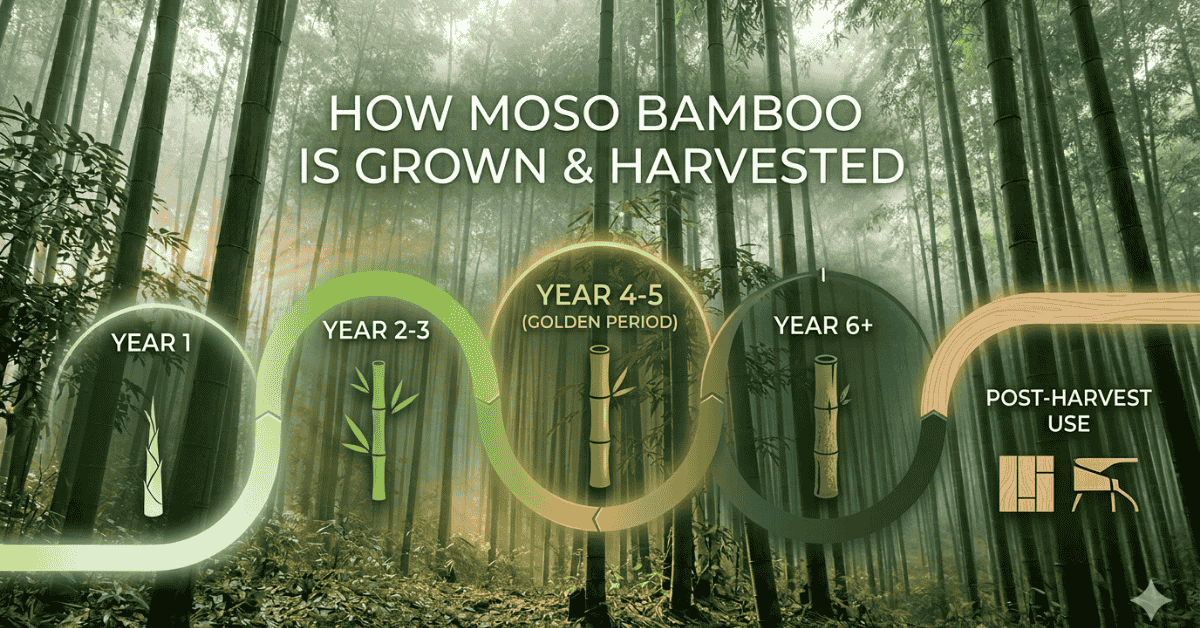
The Bamboo Life Cycle
Year 1: New shoot emerges (spring)
1. Shoots up in 2-3 months to full height
2. Still soft, not usable
Year 2-3: Hardening phase
1. Bamboo strengthens
2. Still too young for quality products
Year 4-5: Prime harvest age ✅
1. Maximum fiber density
2. Optimal strength
3. Perfect for premium products
Year 6+: Past prime
1. Quality declines
2. Fibers loosen
The key: Harvest at exactly the right age. Too young = weak. Too old = deteriorating.
Forest Maintenance: Year-Round Work
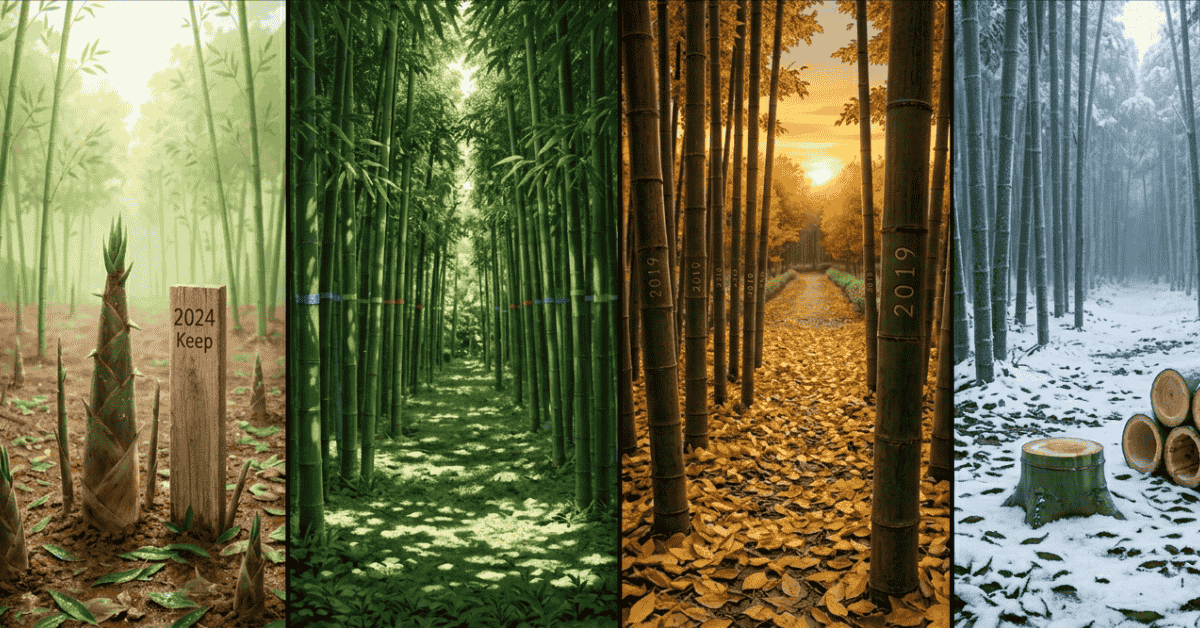
Spring: New Shoot Season
What happens: New shoots emerge from underground roots.
Management tasks:
1. Protect new shoots
2. Thin out shoots (keep only the strongest 30-40 per acre)
3. Remove weak or damaged ones
Why: Like thinning fruit—fewer shoots, but each one stronger and higher quality.
Summer: Growth and Care
What happens: Shoots reach full height. Leaves develop.
Management tasks:
1. Weed control (remove competing plants)
2. Pest monitoring (check for insects, disease)
3. Irrigation if needed (ensure consistent moisture)
Why: Stressed bamboo = weak fibers. Healthy growth = strong bamboo.
Autumn: Strengthening Phase
What happens: Bamboo stops growing taller. Energy goes into hardening.
Management tasks:
1. Nutrient management (organic fertilizer if needed)
2. Mark 4-5 year old bamboo for winter harvest
3. Remove diseased culms
Why: This is when bamboo develops the density and strength for quality products.
Winter: Harvest Season
Why winter?
Lower moisture content:Less sap in winter、Easier to dry、Less cracking during processing.
Dormant growth: Cutting doesn't stress the forest、Root system preparing for spring.
This is THE harvest season for premium bamboo.
The Harvest Process: Done Right
Step 1: Selective Harvesting (The 5-Year Rule)
Not all bamboo is equal. We only mark culms that meet strict industrial standards:
✅ The Prime Window: Only 4-5 years old (peak density).
✅ Size & Health: Diameter 10-18cm with zero cracks or pests.
❌ The Rejects: Anything under 4 years (too soft) or over 6 years (too brittle) stays to maintain forest health.
Step 2: Precision Cutting (The "Saw" Standards)
How we cut directly impacts your product's structural integrity:
Low & Lean: Cut within 20cm of the ground to encourage new shoot growth.
Scientific Timing: Harvested in early morning when sap flow is lowest—this is the first step in natural mold prevention.
Clean Angle: Sharp, angled cuts prevent water pooling and protect the root system.
Step 3: Rapid Processing (The 48h Window)
Speed is quality. Fresh bamboo begins to degrade the moment it's cut:
Timeline: Transported to the facility within 24-48 hours.
Benefit: Preserves natural fiber strength and ensures a cleaner, whiter finish for the final product.
Sustainable Forest Management
The 30% Rule: Quality Through Balance
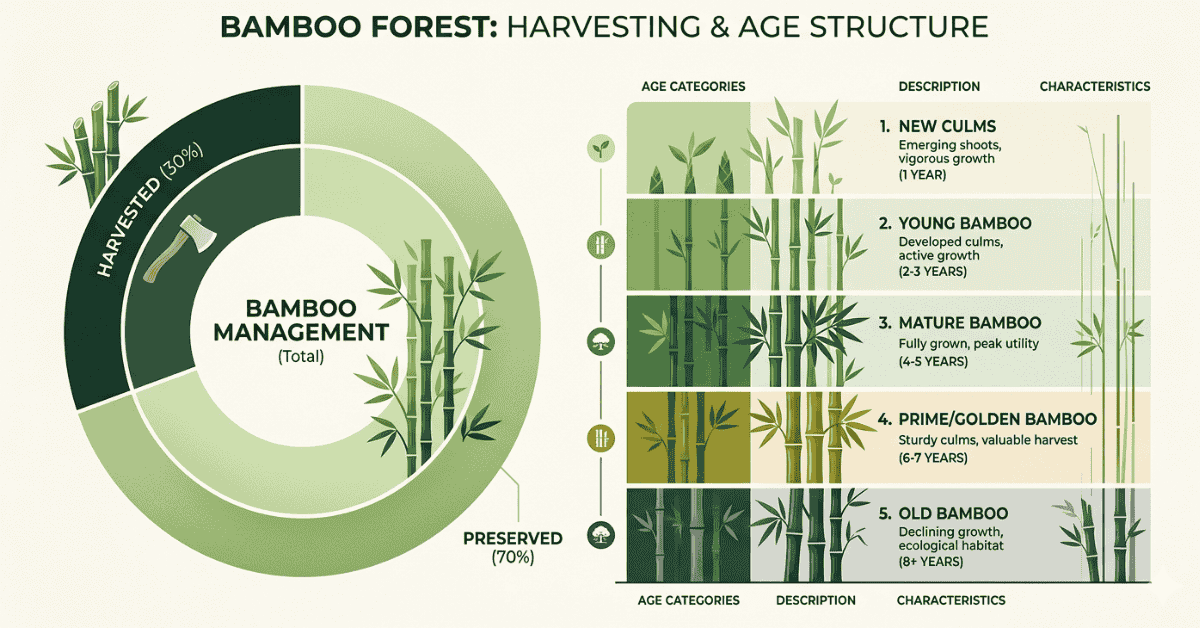
We never "clear-cut." Only 30% of mature bamboo is harvested annually.
The Logic: Leaving 70% protects root vitality and ensures a continuous, year-over-year supply.
The Risk: Overharvesting leads to short-term gains but long-term resource collapse.
Rotation Management: The 20/30 Strategy
A professional forest is a living inventory managed by age:
1. 20% New shoots (Future stock)
2. 20% Young (Developing density)
3. 30% Prime (4-5 Years) ✅ Harvest Zone
4. 30% Mature/Old (Maintaining structure)
5. Result: No "boom-bust" cycles—just consistent productivity and price stability.
Natural Regeneration: A Perpetual Resource
Moso bamboo is the ultimate renewable material. Unlike timber, there is no need to replant:
The Process: Harvest culms → Roots stay alive → New shoots emerge next spring.
The Advantage: Zero land clearing and zero start-over costs. The same forest provides a stable supply for decades.
The Direct Connection: Forest Care = Product Quality
Two products might look the same, but their performance is decided long before they reach the factory. Here is how management impacts your final order:
| Feature | Managed Forest Standard | Generic / Broker Sourcing |
| Raw Material | 4-5 Year Moso | Mixed Age (2-8 Years) |
| Harvest Season | Winter Only | Year-round (High moisture/mold) |
| Traceability | GPS Plot Tracking | Unknown / Random Sources |
Sustainability | 30% Selective Rule (FSC) | Clear-cutting (Unstable supply) |
Product Result | Strong, Smooth, Consistent | Weak, Splintering, Brittle |
Why the Supplier's Forest Matters
At the end of the day, growing and harvesting Moso bamboo isn't just about“cutting plants.” It is a year-round commitment to scientific management. A factory can have the best machines, but if they use random-age bamboo or material cut in the wrong season, the quality will never be consistent.
We manage 666 hectares of private forest to eliminate these risks. By controlling the Soil to Saw process, we ensure that every batch of skewers or cutlery you receive meets the same premium standard—durable, safe, and sustainable.
See Where Your Quality Begins
Great products start with great bamboo, and great bamboo starts with superior geography and management.
Missed our last update? Discover why the specific minerals in Fujian's soil are the foundation of our material strength in: [Fujian Moso: Why Origin Defines Bamboo Quality]
Verify Our Standards: Contact us to view our forest management records, FSC documentation, or to schedule a virtual tour of our 666-hectare managed site.
[Connect with Our Supply Chain Partners] Because the best products start in the forest.