The 17cm vs. 14cm Dilemma: Choosing the Right Bulk Bamboo Cutlery
- Share
- publisher
- Eternity
- Issue Time
- May 22,2026
Summary
Sourcing bulk bamboo cutlery? Discover whether 14cm or 17cm fits your menu. Choose the right size for your brand today!
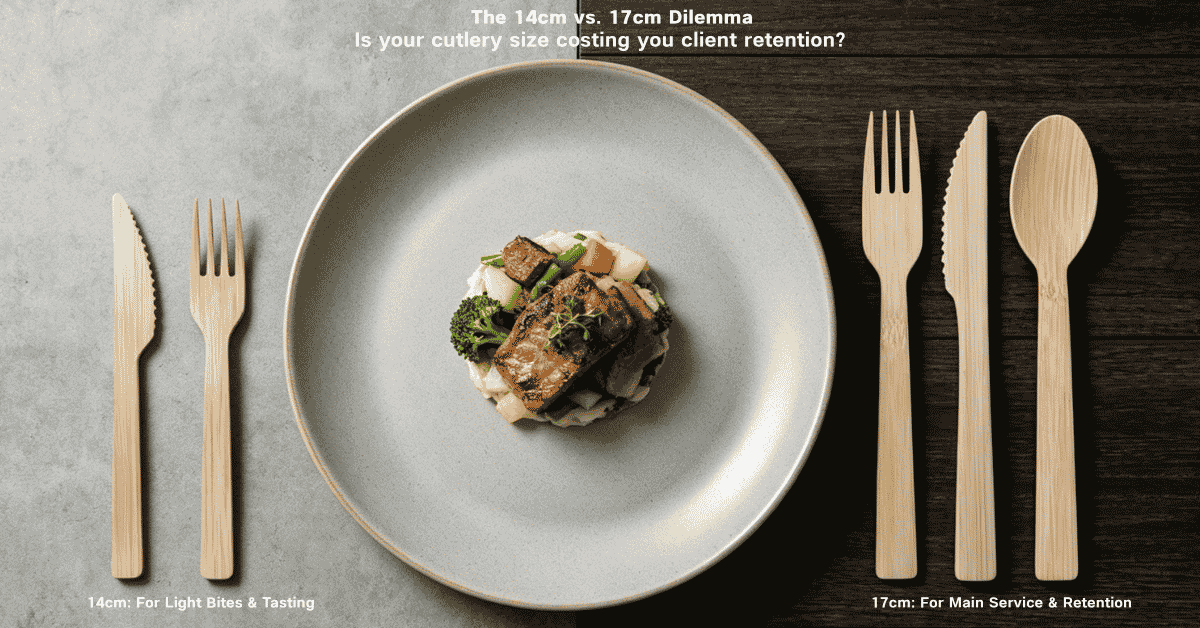
A catering company recently contacted us in frustration. They had just deployed 14cm bamboo forks—the "standard" size recommended by a previous supplier—for a major corporate dinner.
The result? Guests struggled with the undersized utensils, finding them too light and short for a full entree. The food was exceptional, but the diminutive cutlery altered the guests' perception of the entire event, leading to a significant loss in repeat contracts.
In B2B catering and foodservice, the difference between 14cm and 17cm isn't just three centimeters. It is the dividing line between seamless customer satisfaction and questioned quality standards.
Decoding the 3cm Difference
The gap between 14cm (5.5 inches) and 17cm (6.7 inches) appears minor on a spec sheet, but it fundamentally changes three operational metrics:
Structural Rigidity:
Longer pieces of mature bamboo inherently flex less under pressure. A 17cm fork offers the structural integrity required to pierce dense proteins without bending.Tactile Weight:
A 17cm utensil carries significantly more material weight. This extra substance changes how the cutlery balances in a diner's hand, delivering a more premium experience.Leverage and Function:
For adult diners cutting through salads or grilled entrees, the 17cm length provides the necessary physical leverage that shorter cutlery lacks.Sizing Framework: Strategic Use Cases
To optimize your inventory, cutlery sizes should be deployed based on menu structure and event type rather than a one-size-fits-all approach.
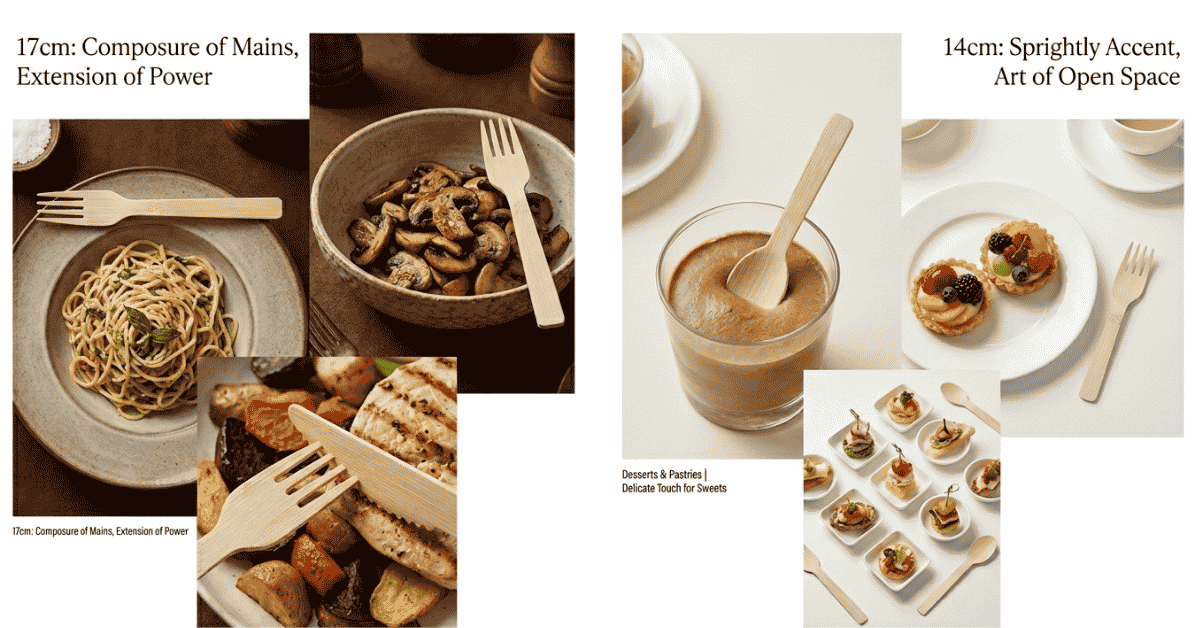
When 14cm Makes Operational Sense
Appetizers and Tapas: Ideal for bite-sized hors d'oeuvres, cocktail shrimp, or small tasting portions where full-sized utensils look disproportionate.
Dessert and Pastry Service: Perfect for cakes, tarts, or ice cream where diners do not need to apply heavy downward cutting pressure.
Child-Centric Dining: Younger guests handle 14cm cutlery with greater comfort and control than full-sized alternatives.
High-Volume Sampling: Excellent for food expos, farmers' markets, or tasting booths with minimal portion sizes.
When 17cm is a Non-Negotiable Requirement
Full Entree Service: Anytime your menu includes complete meals—such as grain bowls, pastas, or heavy proteins—17cm is the adult functional standard.
Mid-to-Premium Brand Positioning: If your brand promotes sustainable quality, small cutlery undermines that message. Mid-sized and full-sized entrees require substantial utensils to avoid feeling inadequate.
Corporate Catering and Weddings: Professional business lunches and formal receptions demand cutlery that aligns with traditional dining expectations.
Dine-In Operations: Even in fast-casual environments, seated guests expect restaurant-appropriate utensils. 14cm cutlery risks reading as an afterthought.
Material Quality Beyond Sizing
While length defines functionality, manufacturing precision determines the final user experience. A highly refined 14cm utensil will always outperform a poorly processed 17cm alternative.
When evaluating bulk bamboo cutlery, procurement teams must verify three quality indicators:
Anatomical Weight Distribution: Premium cutlery features a gradual thickness transition near the neck to ensure the utensil balances correctly in the hand.
Double-Polished Edges: High-grade manufacturing utilizes advanced dry-polishing to eliminate micro-rough spots, ensuring smooth edges that never catch on lips or teeth.
Fiber Maturity: Utensils must be manufactured from 4-5 year mature Moso bamboo culms. Younger bamboo lacks the fibrous density required to resist bending when exposed to hot, dense foods.
The Strategic Hybrid Approach
High-performance foodservice operations rarely choose just one size. Instead, they deploy a hybrid inventory strategy to maximize efficiency:
17cm is reserved exclusively for the main course, protecting the core dining experience where leverage and rigidity matter most.
14cm is allocated strictly to side dishes, appetizers, and dessert courses.
This segmentation preserves your brand reputation during the main meal while streamlining resource consumption during lighter courses. One regional restaurant group we partner with maintained their high customer satisfaction ratings while reducing total cutlery allocation waste by integrating this exact course-by-course division.
Sourcing Truths: Evaluating Your Supplier
When negotiating with manufacturing partners, vague answers usually signal misaligned priorities. To ensure your supplier is optimizing for your operational success rather than their own stock allocation, ask these targeted questions:
"What percentage of your commercial restaurant accounts utilize 14cm versus 17cm for main entree dinner service?"
"Can you provide technical specifications regarding the moisture content and fiber density differences between your sizing tiers?"
"Do you provide mixed comparison sample packs so we can test the rigidity against our specific menu items?"
Decision Framework: Which Size Fits Your Menu?
Not sure which size to select for your next order? Use this quick framework to align your cutlery with your operational goals. If you lean toward the 17cm column on two or more points, it is the safer, more professional choice for your brand.
| Evaluation Metric | Choose 14cm (Acceptable) | Choose 17cm (Required) |
| Primary Use | Appetizers, desserts, or samples | Full entrees, pasta, or hearty meals |
| Brand Positioning | Budget-focused / High-volume | Mid-tier to Premium / Quality-driven |
| Customer Risk | One-time event / Low expectations | Repeat business / Referral-dependent |
Final Recommendation: Making the Right Choice
There is no "one-size-fits-all" solution; the ideal cutlery size depends entirely on your menu and dining context. While 17cm is the professional standard for most full-meal service due to its superior leverage and structural integrity, 14cm remains an excellent, cost-effective choice for lighter bites and dessert service. Many of our most successful clients optimize their inventory by stocking both: 17cm for main courses and 14cm for sides and sweets.
Ultimately, the best size isn't what looks good on a spec sheet—it's the one your guests feel comfortable using. We recommend testing both against your specific food items to see which provides the best balance of function and presentation.
At QL, we produce both sizes to identical high-quality standards. Click here to request a comparison sample pack and decide for yourself which configuration best supports your specific operational needs.