Bamboo vs Wooden vs Metal Skewers: Which Is Best for Food Service?
- Share
- publisher
- QL Bamboo
- Issue Time
- Oct 22,2026
Summary
Compare bamboo, wooden and metal skewers for food service on cost, heat, cleaning and sizing, then use eight supplier checks and a sample test before you approve a bulk order.
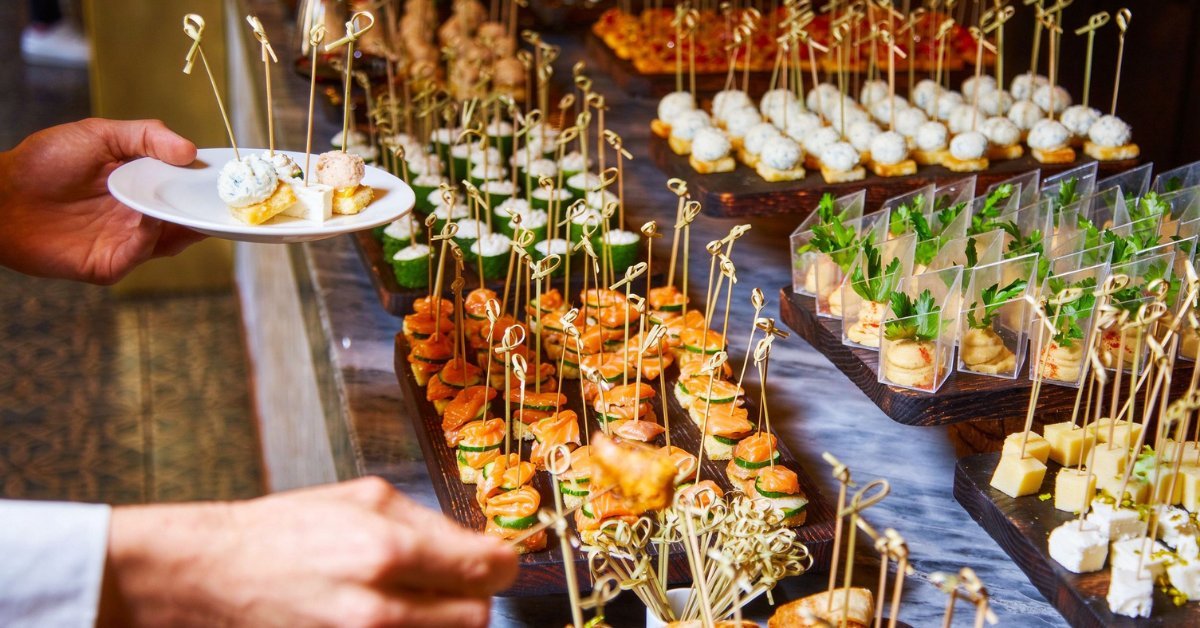
If you are choosing between bamboo, wooden and metal skewers, the decision is usually clearer than it first looks. It comes down to four questions about your own kitchen: how heavy your food is, how you heat it, how often a skewer would be reused, and whether you already have a washing routine.
This guide is written for restaurant groups, caterers, BBQ suppliers, food manufacturers, importers and foodservice distributors. It walks through each question in turn, compares the three materials on the points that actually change your operating cost, and shows what to verify before you approve a bulk order.
Which skewer material fits your operation? Bamboo is a good fit if you run disposable BBQ, kebabs, catering or high-volume food presentation and want to skip collecting and washing used skewers. Other wooden skewers work when the specific wood and design suit the food, such as appetizers, fruit and cheese. Metal skewers suit kitchens that grill repeatedly and already have safe cleaning, sanitizing and storage routines.
Four questions that decide the right skewer for you
The material label matters less than how you work. Answer these four before you compare suppliers or prices, because they remove most of the options for you.
- How heavy is my food? Heavier food needs a stronger, thicker skewer. A 2.0 mm cocktail pick and a 6.0 mm corn skewer are not interchangeable, even though both are bamboo.
- How will I heat it? Direct flame, oven and cold service stress a skewer differently, and they call for different exposed lengths and thicknesses.
- How often would a skewer be reused? The more often it is reused, the more a reusable option can pay off against its purchase price.
- Do I already have a cleaning workflow? Reuse only works where washing, sanitizing, drying and storage are already in place. Without that routine, reusable skewers become an unmanaged risk.
Whichever way you lean, compare actual product specifications and test representative samples under your own conditions. That small step protects you from ordering something that looks right on paper but fails in your kitchen.
Bamboo vs wooden vs metal skewers: key differences at a glance
This comparison assumes typical single-use bamboo skewers, typical single-use skewers made from other timber, and typical reusable stainless steel skewers. Metal performance in particular depends on the alloy, design and handle, so read each row as a general tendency, not a specification.
| What you are comparing | Bamboo | Other wood | Metal |
|---|---|---|---|
| Typical use | Disposable food service and grilling | Disposable food service and grilling | Reusable grilling and cooking |
| Purchase model | Usually single-use | Usually single-use | Usually reusable |
| Upfront cost per piece | Typically low | Typically low | Typically higher |
| Cleaning after use | None; discard under local waste rules | None; discard under local waste rules | Wash, sanitize and dry after each use |
| What to check by hand | Smoothness, straightness, strength | Grain, smoothness, splitting | Sharp tips, edges, heat conducted to the handle |
| Heat considerations | Depends on design, moisture and cooking method | Depends on species, dimensions and moisture | Depends on metal type, design and handle |
| Storage | Keep dry and protected from contamination | Keep dry and protected from contamination | Organized storage for clean and used stock; dry after washing |
| End of life | Depends on coatings, contamination and local waste systems | Depends on coatings, contamination and local waste systems | Reuse, then recycling where local systems accept it |
Bamboo skewers: what you gain, what to watch and where they fit
Bamboo skewers are single-use sticks cut from bamboo, a fast-growing grass, then sanded and sized for grilling, serving and food processing. They are the most common disposable choice for BBQ, catering and appetizer service.
Pick the shape for the job
The shape changes how a skewer performs more than the material label does:
- Round skewers suit general grilling and kebabs.
- Flat paddle (teppo) skewers have a wide handle that is easy to flip and hold.
- Knotted loop picks suit cocktails and canapés.
- Blunt-tip skewers suit soft foods and settings where sharp points are a concern.
For reference, QL bamboo skewers range from 2.0 to 6.0 mm in diameter and 100 to 400 mm in length, with a 6.0 × 150 mm heavy-duty corn skewer at the thick end. The full size and shape breakdown sits in this guide to skewer lengths, diameters and shapes.
What you gain
- No cleaning cycle. Used skewers are discarded, so there is no washing, sanitizing or return of used stock.
- A wide size range. From fine cocktail picks to heavy-duty skewers, one supplier can often cover many of your sizes.
- Dimensions you can specify. Ask for the diameter tolerance and how it is verified. It affects portion control and automatic skewering lines.
- A plant-based material. This can support your materials strategy, subject to sourcing and local end-of-life options.
What to watch for
- Quality varies. Thin or poorly made skewers can break or splinter, so check straightness and surface finish on samples. Here is how to inspect straightness and surface quality before a bulk order.
- Storage matters. Keep skewers sealed in a dry, ventilated place, away from moisture and pests. Mold and pest prevention is covered here.
Getting reliable results over heat
Bamboo skewers can char where the exposed ends meet direct flame or prolonged high heat. Performance depends on the skewer dimensions, moisture condition, construction and cooking method. To protect your results:
- Follow the manufacturer preparation and use instructions, including any soaking recommendation.
- Keep exposed ends away from direct flame where practical.
- Test the skewer with your intended food, heat source and cooking time.
- Do not assume that soaking alone prevents charring or makes a skewer suitable for every grilling method.
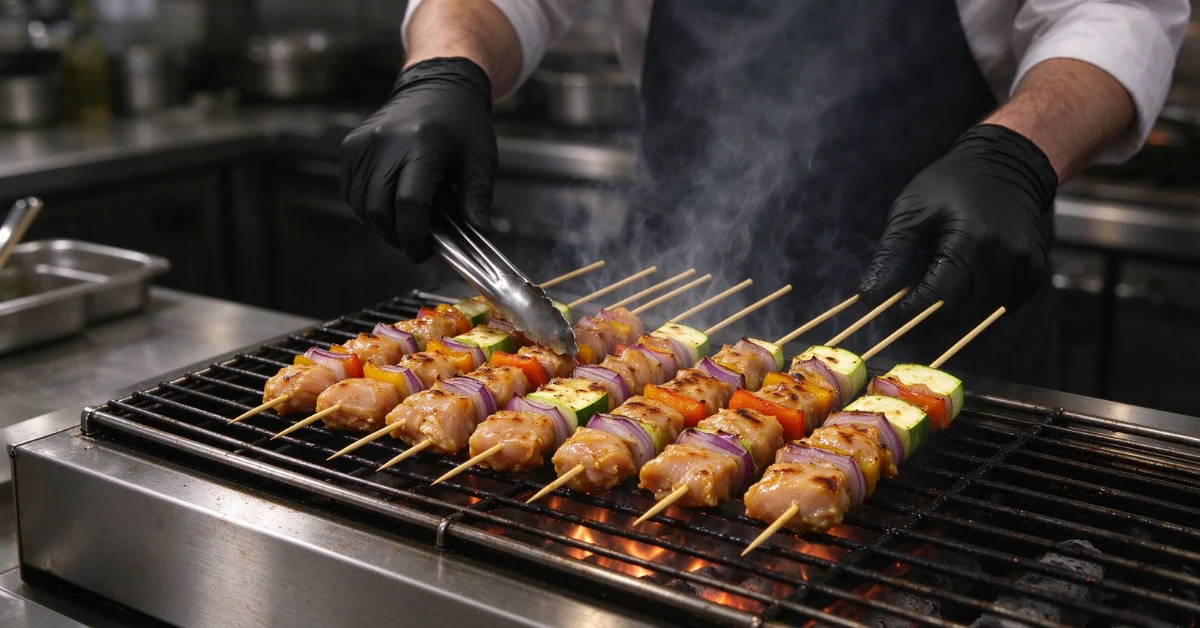
Soaking adds water to the outer layer of the stick. It does not raise the ignition point of the material, and it does not make a thin skewer suitable for a heavy load. Treat any soaking advice as a preparation step, and confirm heat behaviour with a test batch on your own equipment.
Where bamboo fits best
- BBQ restaurants and kebab preparation
- Catering, buffets and outdoor events
- Appetizers, fruit skewers and food presentation
- Foodservice distributors supplying disposable consumables
Takeaway for you: bamboo is a practical choice when disposable convenience and size variety matter. It is not automatically better on every measure, so test the specific product rather than the category.
Wooden skewers: what you gain, what to watch and where they fit
In this guide, wooden skewers means skewers made from timber other than bamboo, and bamboo is treated as a separate category so the comparison stays clear. In wider commercial usage, wooden skewers is sometimes a general term for plant-based skewers including bamboo products, so always check which one a supplier means.
The practical difference comes from the species, grain or fiber structure, dimensions, manufacturing quality and intended use, not from the product name alone.
What you gain
- Widely used for single-use service. They suit food preparation and portion-controlled serving.
- A good fit for small items. Cocktail appetizers and bite-sized foods are a common use.
- Variety. Lengths, shapes and wood types differ by supplier, which gives you room to match the presentation you want.
What to watch for
- Performance varies by wood species, grain, moisture content and processing. Two wooden skewers of the same size can behave very differently.
- Splitting, rough surfaces and uneven dimensions can affect usability and your guests experience.
- Heat performance cannot be generalized across all wooden products. Test the actual item with your cooking method.
Where wood fits best
- Cocktail appetizers and bite-sized foods
- Fruit, cheese and snack platters
- Selected grilling and catering uses, depending on the specification
Takeaway for you: compare the actual product specification and sample quality. Do not assume all wooden skewers perform alike. For the wider supply-chain picture, see bamboo vs wood in the supply chain.
Metal skewers: what you gain, what to watch and where they fit
Metal skewers, most often stainless steel, are built for repeated use. They make sense when your kitchen can run them as managed equipment rather than as a consumable.
Common types
What you gain
- Designed for repeated use when properly maintained.
- Suited to frequent grilling and heavy-duty applications.
- A long service life is possible under appropriate operating conditions.
What to plan for
- Higher initial cost per piece in most cases.
- A full reuse routine: cleaning, sanitizing, drying, inspection and storage.
- Heat in the handle. Metal conducts heat, so plan for handles and burn prevention.
- Replacement costs. Lost, bent or corroded items must be replaced.
Where metal fits best
- Restaurants with an established reusable-utensil workflow
- Frequent grilling operations
- Kitchens that can wash, store and track skewers efficiently
Takeaway for you: evaluate metal skewers as part of a reusable-equipment system, not as a single product purchase. This comparison of bamboo and metal for commercial use covers the sustainability side in more detail.
Which skewer fits your food service application?
Match the skewer to the job first and the material second. Treat this table as a starting point, not a final specification.
| Your application | Material to consider | What to check before you buy |
|---|---|---|
| High-volume BBQ catering | Bamboo or other wood for disposable service; metal for managed reuse | Food weight, exposed length, heat exposure and waste handling |
| Meat skewers and kebabs | Bamboo, wood or metal, depending on the cooking process | Skewer strength, diameter, length and resistance to bending or breakage |
| Cocktail appetizers and buffets | Bamboo or wood for disposable presentation | Appearance, tip design, portion size and handling safety |
| Fruit and cheese platters | Bamboo or wood | Surface smoothness, tip design, length and presentation |
| Outdoor events and festivals | Bamboo or wood when used as disposable products | Supply volume, storage, service speed and waste collection |
| Restaurants with frequent grilling | Bamboo for disposable service; metal for suitable reusable workflows | Daily usage, washing capacity, labor and replacement cost |
| Food manufacturers | Material and design compatible with the production process | Equipment compatibility, dimensional tolerance, breakage risk and food-contact documentation |
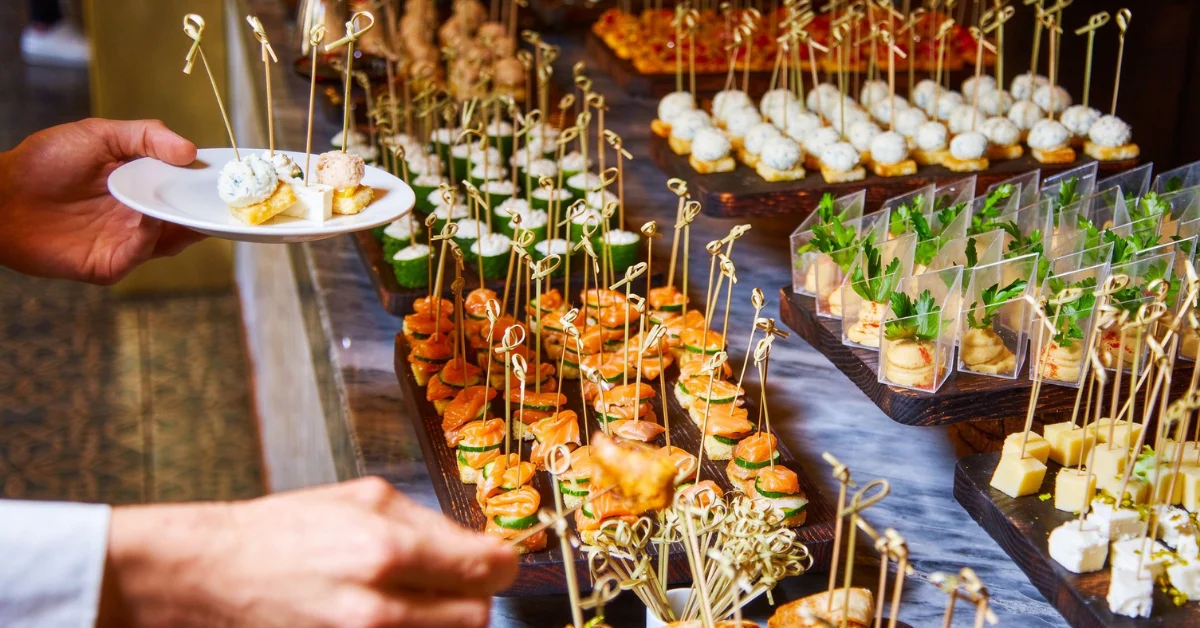
How to use this table. For bamboo, confirm diameter, length, tip design and acceptable dimensional variation against your actual food and equipment. For metal, confirm that the product is intended for repeated use and can be cleaned and maintained under your procedures. For all materials, test samples before approving a bulk order.
Typical bamboo skewer sizes by application
If you are not sure where to start with bamboo, these reference ranges narrow the field. They are not an industry standard. The right size depends on food weight, how easily the food pierces, the cooking method and your equipment.
| Use | Reference size | Reference type |
|---|---|---|
| BBQ, kebab and satay grilling | 3.0–4.0 mm × 200–300 mm | Round, pointed tip |
| Corn on the cob | 6.0 × 150 mm | Heavy-duty corn skewer |
| Marshmallow and cotton candy | 4.0–5.0 mm × 250–300 mm | Round, extra-long |
| Fruit kebabs and appetizers | 2.0–2.5 mm × 100–200 mm | Cocktail pick or blunt tip |
| Cocktails and canapés | 2.0–3.0 mm × 100–150 mm | Knotted loop or flat paddle |
| High-speed processing lines | 3.0–4.0 mm, tight tolerance | Round, uniform diameter |
Two sizing points decide most orders: diameter against food weight, and length against the distance between the food and the heat source. If you buy through a distributor, agree the tolerance and the measurement method in writing, because ±0.15 mm and a loose visual check are not the same order.
Disposable vs reusable skewers: compare the real operating cost
The cheapest skewer per piece is not always the cheapest skewer to run. To see which is better for you, compare total operating cost over the same period and the same service volume, using your own figures.
Costs to include
| Cost item | Disposable (bamboo or wood) | Reusable (metal) |
|---|---|---|
| Purchase | Recurring, per order | One-time, plus replacements |
| Washing, sanitizing, drying labor | None | Every cycle |
| Water, energy, cleaning supplies | None | Every cycle |
| Storage and inventory | Dry stock of unused skewers | Clean stock, used stock and drying space |
| Loss and breakage | Spoilage or damaged packs | Lost, bent or corroded pieces |
| Waste collection and disposal | Per local rules | Minimal, until end of life |
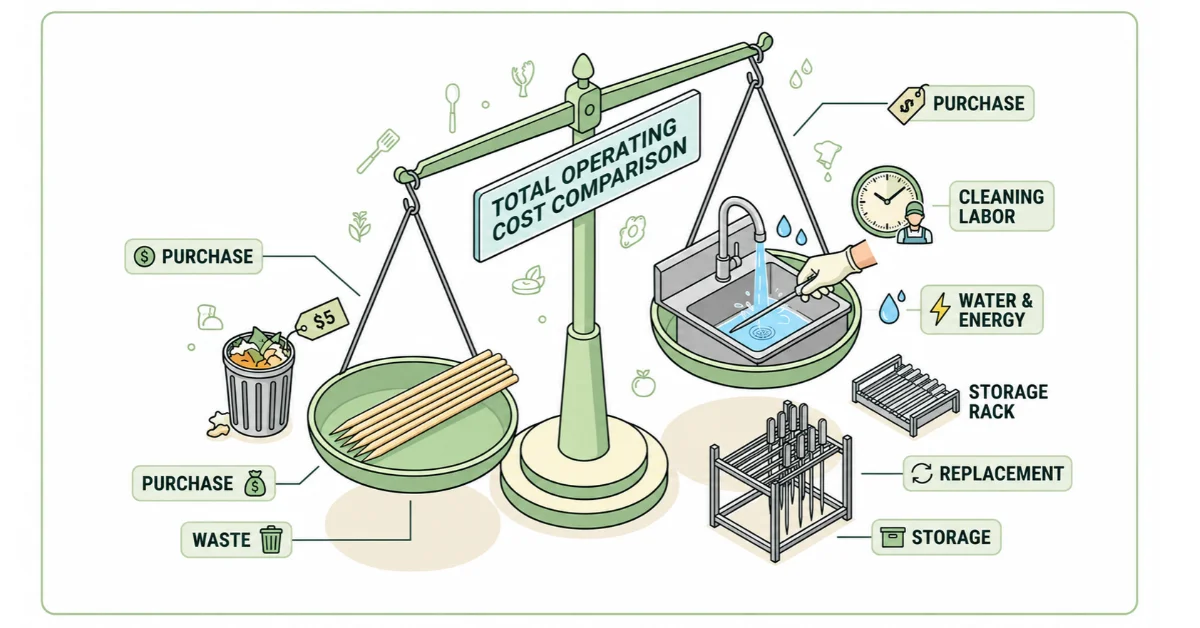
A simple way to compare
Calculate both options over the same period and for the same number of serving occasions:
- Disposable cost = units consumed × cost per unit + storage + waste handling
- Reusable cost = purchase + cleaning and sanitizing + replacement + storage − residual value
- Cost per 1,000 servings = total cost for the period ÷ servings in the period × 1,000
For reusable skewers, spread the purchase cost across the period according to expected service life. Count losses, damage and the real number of successful uses rather than assuming every skewer lasts indefinitely. Include residual value only if you can justify it.
- The result depends on your local labor costs, dishwashing capacity, usage frequency and replacement rates, so there is no universal break-even point.
- Treat any fixed savings percentage, including one quoted by a supplier, as unverified until it comes from a documented calculation that matches your operation.
Food safety, heat resistance and sustainability: what to verify before you buy
Generic claims about any skewer material can mislead. To protect yourself, verify three things: the food-contact documents, the heat behavior in your own cooking method, and the real end-of-life route.
Three things to verify before you sign off a bulk order
- Food-contact test reports that name the product, the size and your destination market
- Heat behaviour tested with your own food, your own heat source and your own cooking time
- An end-of-life route that actually exists where you operate, not one that exists in theory
Food-contact safety
- Confirm the product is intended for the food-contact use you have in mind.
- Ask for documents that apply to the product and to your destination market, such as test reports from an accredited laboratory.
- Check the material, any coatings or treatments, and any restrictions that apply.
Heat resistance and cooking method
- Separate direct flame, charcoal grilling, oven use and cold presentation. Each stresses a skewer differently.
- Consider exposed length, thickness, cooking time and the manufacturer instructions, including any soaking recommendation.
- Do not assume all bamboo, wooden or metal skewers share one temperature limit. Metal also carries heat into the handle.
For oven work specifically, this oven-safety guide for professional grilling covers the variables in more detail.
Sustainability and end of life
- Compare sourcing, product lifespan and how the skewers are actually used.
- Count the water, energy and cleaning supplies that reusable skewers consume.
- Check whether commercial composting, recycling or general waste is available where you operate.
Takeaway for you: do not treat natural, reusable or biodegradable as proof of lower environmental impact. Contaminated or coated items may not be accepted for composting. Choose on verifiable performance, the documents that apply to your market and the waste system you actually have.
How to evaluate a commercial skewer supplier: 8 checks that protect your order
A reliable skewer supplier can show specifications, test documents, quality records and repeat-order consistency, not just a price. Use these eight checks with any supplier, including QL.
| Check | What to ask for | A good sign |
|---|---|---|
| 1. Material and consistency | Material, grade, moisture limit and diameter tolerance | Limits are written per size, not only per product family |
| 2. Size, shape and tip options | Diameter and length range, tip types, custom sizes | You can test a sample of every size you plan to buy |
| 3. Surface, straightness, breakage | Inspection method and acceptance criteria | Samples are straight against a flat surface, free of burrs and splinters, and hold up when piercing your food |
| 4. Food-contact documents | Test reports for your destination market | Report date, product, size and standard match what you are ordering |
| 5. Capacity and repeat orders | Production capacity, lead time, how specifications are held between orders | Samples from different lots look and measure alike |
| 6. MOQ, samples and lead time | Minimum order, sample policy, quotation time | Terms are confirmed in writing for your size and volume |
| 7. Packaging and customization | Pack sizes, private label, logo printing | Packaging samples and artwork are approved before production |
| 8. Lot records and complaints | Lot numbers, batch records, complaint process | A delivered lot can be traced to its inspection record |
Before a large order, test representative samples under your real preparation and service conditions. Check straightness, surface finish, strength on your food and behavior over your heat source. For a longer sourcing walkthrough, see the 30-second buyer checklist, how to evaluate a supplier for long-term supply and how bamboo skewers are made.
If you are considering QL Bamboo: what you can verify yourself
To make your evaluation easier, QL Bamboo (Fujian QL Houseware Manufacturing Co., Ltd, Shaowu, Nanping, Fujian) publishes the details below for its bamboo skewers. They are as stated on qlbamboo.com in October 2026. Please ask QL to confirm that they apply to your size, quantity and destination before you rely on them.
| Item | What QL states | Where to check |
|---|---|---|
| Raw material | 100% natural Moso bamboo, food grade, no chemical additives; bamboo over five years old from its own 666+ hectare forest in Nanping, Fujian | Bamboo skewers page |
| Scale | 88,600 m² modern factory; 138+ automatic machines; 720+ containers shipped per year | About QL, www.qlbamboo.com |
| Sizes | 2.0–6.0 mm diameter, 100–400 mm length; round, flat, knotted, blunt-tip and corn skewers | Size chart on the bamboo skewers page |
| Tolerance | Diameter ±0.15 mm; length tolerance graded by length class; both confirmed on the order specification before production | FAQ on the bamboo skewers page |
| Moisture | 8%–12%, verified per batch with a moisture analyzer | Bamboo skewers page |
| Documents | LFGB and SGS test reports on request; FDA documentation on request; FSC on the 6 mm heavy-duty corn skewer only | Bamboo skewers page |
| Traceability and QC equipment | Lot number on each lot; metal detectors, moisture analyzers and UV sterilization units | QC system |
| Order terms | MOQ 100 cartons per size; mixed and custom sizes quoted separately; free samples with courier cost refunded against the first bulk order; price sheet within 24 hours of receiving size, volume and destination port | Bamboo skewers page |
| Customization | Logo printing, custom sizes and private-label packaging from 100 cartons | Bamboo skewers page |
Each row above can be checked without a sales conversation: the size chart, the tolerance statement and the document list are published, and the QC equipment is described in the same place as the production flow. Ask for the report that matches your size and market, then confirm it against the order specification.
Final verdict: which skewer should you choose?
Choose the material that fits your food, your cooking process, your service model and your total operating cost, not simply the lowest purchase price.
- Choose bamboo skewers when disposable convenience, varied sizing and high-volume service are your priorities.
- Choose other wooden skewers when their specific characteristics and available specifications fit your application.
- Choose metal skewers when repeated use fits your operation and you already have cleaning, handling and storage processes in place.
If you decide bamboo fits, contact QL with your size, quantity and destination port to request samples for testing and a quotation. Testing samples first is the safest way to confirm the fit before you commit to a bulk order.
Frequently asked questions
Are bamboo skewers better than wooden skewers?
Not in every case. The result depends on the specific product, its manufacturing quality and your application. Bamboo skewers come in many diameters and lengths, while wooden skewers suit many small serving jobs. Compare samples of each for straightness, surface smoothness and strength on your own food before you choose.
Are bamboo skewers better than metal skewers for commercial BBQ?
It depends on your workflow. Bamboo suits kitchens and caterers that want no washing, collection or storage of used skewers. Metal suits grill-heavy kitchens that already wash, sanitize, inspect and store reusable equipment. Compare total operating cost, including labor, utilities, replacement and storage, not only the price per skewer.
Do bamboo skewers need to be soaked before grilling?
It depends on the skewer, the cooking method and the manufacturer instructions. Follow the supplier preparation guidance, including any soaking recommendation. Soaking alone does not stop exposed ends from charring or make a skewer suitable for every grilling method, so keep handles away from direct flame and test with your own food and heat source.
Can bamboo and wooden skewers be used in an oven?
Often yes, but check the product instructions first. Suitability depends on exposed length, temperature and cooking time. Keep exposed ends away from heating elements, consider shielding them with foil, and test a small batch before service. QL's bamboo skewers vs wood oven guide covers this in detail.
Are bamboo skewers food-safe?
They can be, when they are made for food contact and finished smoothly. Check the intended use, surface quality and processing, and ask the supplier for documents that apply to your destination market, such as test reports from an accredited laboratory. Confirm that each document covers the product and size you are buying.
Are reusable metal skewers more cost-effective than disposable skewers?
Sometimes, at high usage in a kitchen with spare washing capacity. Reusable skewers spread their purchase cost over many uses, but they add cleaning labor, water, energy, replacement and storage. Disposable skewers cost more per use and need no washing. Calculate both over the same period with your own figures.
How do I choose the right bamboo skewer diameter for meat and vegetables?
Start with food weight, how easily the food pierces, skewer length and the cooking method. Heavier food needs a thicker, stiffer skewer. As a reference, QL's size chart lists 3.0 mm for chicken chunks and shrimp, 4.0 mm for meat skewers and 5.0 mm for heavy-duty BBQ. Confirm the choice with samples on your own food and equipment.
What quality checks should importers perform before approving a bulk skewer order?
Write acceptance criteria into the order before production: dimensional tolerance, straightness, surface burrs and splinters, breakage rate, moisture, packaging and lot traceability. Ask for food-contact documents for your market, then inspect samples and the first shipment against those criteria. QL's skewer inspection guide shows how.